Autonomous AI Systems

What's in this lesson

This lesson explores how modern AI systems move beyond simple responses to independently pursue objectives, execute tasks, and adapt to changing conditions. You'll learn about goal-driven execution, tool usage, memory, and reflection loops.

Why this matters

The next generation of AI is not just answering questions—it is completing tasks. Autonomous systems can plan, act, and evaluate outcomes, enabling highly capable digital coworkers and workflow automation.

Beyond the Chatbot

Most AI interactions today are reactive: you provide a prompt, the model predicts the next sequence of words, and stops. It has no continuous drive or autonomy. Autonomous Agents represent a paradigm shift.
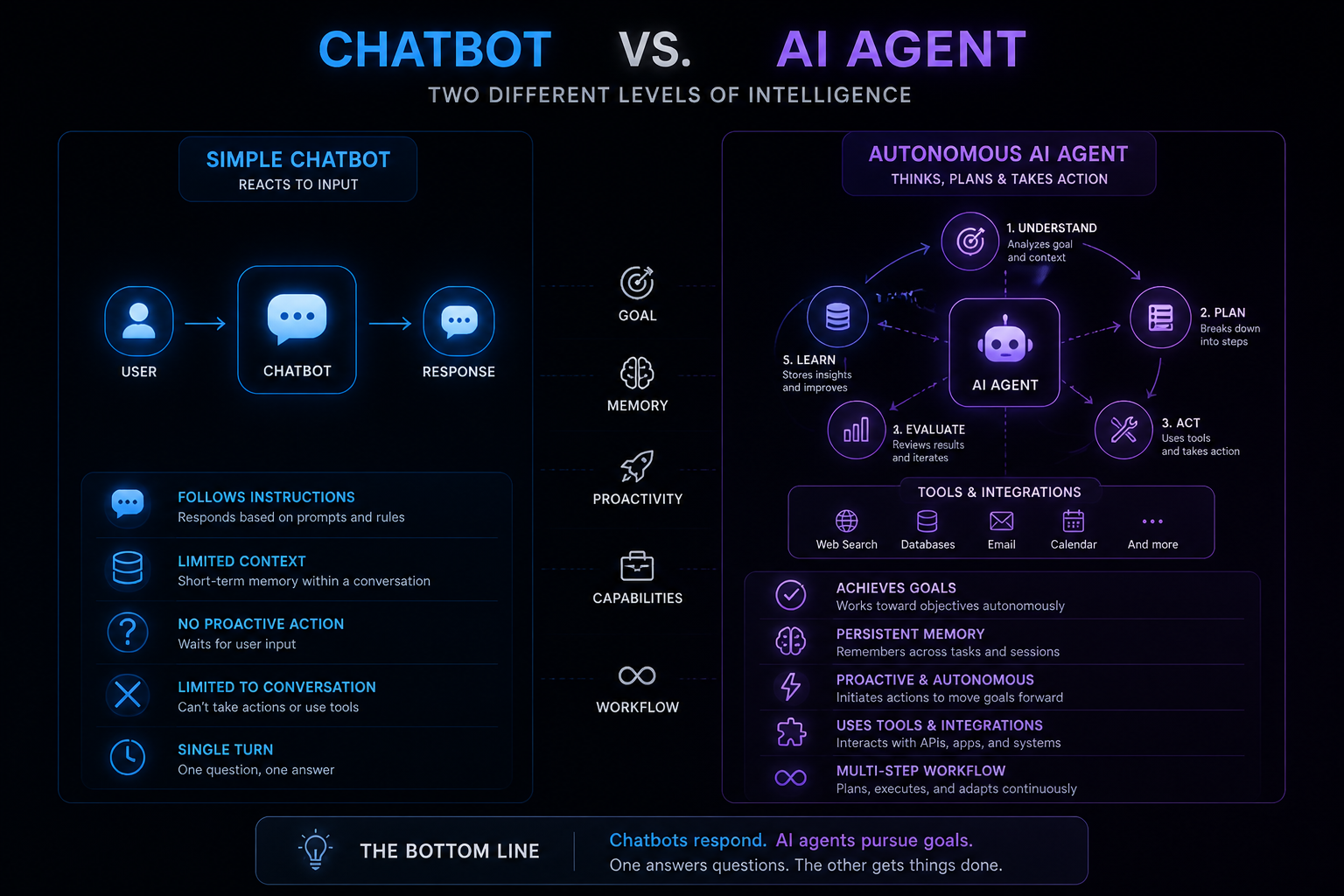
Simple chatbot vs Autonomous AI agent

Click below to reveal the core differences in behavior:

Click to reveal System A
Click to reveal System B

Goal Definition & Objective Management

Autonomy begins with intent. Before an agent can act, it must translate a messy, vague human prompt into a structured, actionable objective. If the goal is misaligned, every subsequent autonomous action will be flawed.

Translating messy prompts into structured goals

Interactive: Goal Translation

Click "Process Prompt" to see how the agent structures intent before acting.

User Prompt:
"Find me some stuff about recent AI news and put it in a doc."

Planning & Task Decomposition

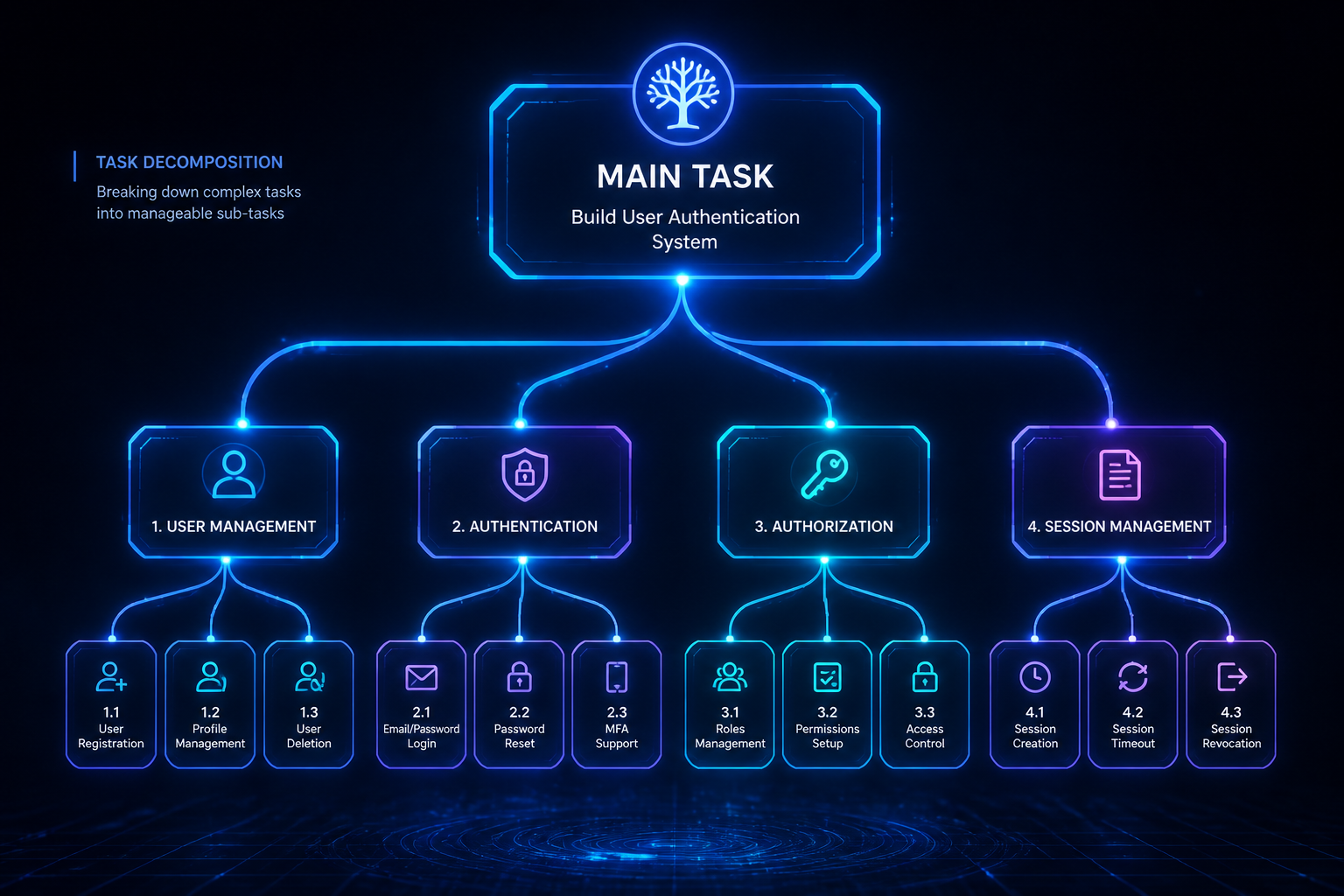
LLMs struggle to solve complex problems in a single pass. To succeed autonomously, the agent must break its high-level goal into a sequence of smaller, manageable sub-tasks. This creates a plan or "task tree."

Tree diagram breaking a main node into sub-nodes

Goal: Write Market Report

Knowledge Check

What is the primary purpose of task decomposition in an autonomous agent?

Memory & State Management

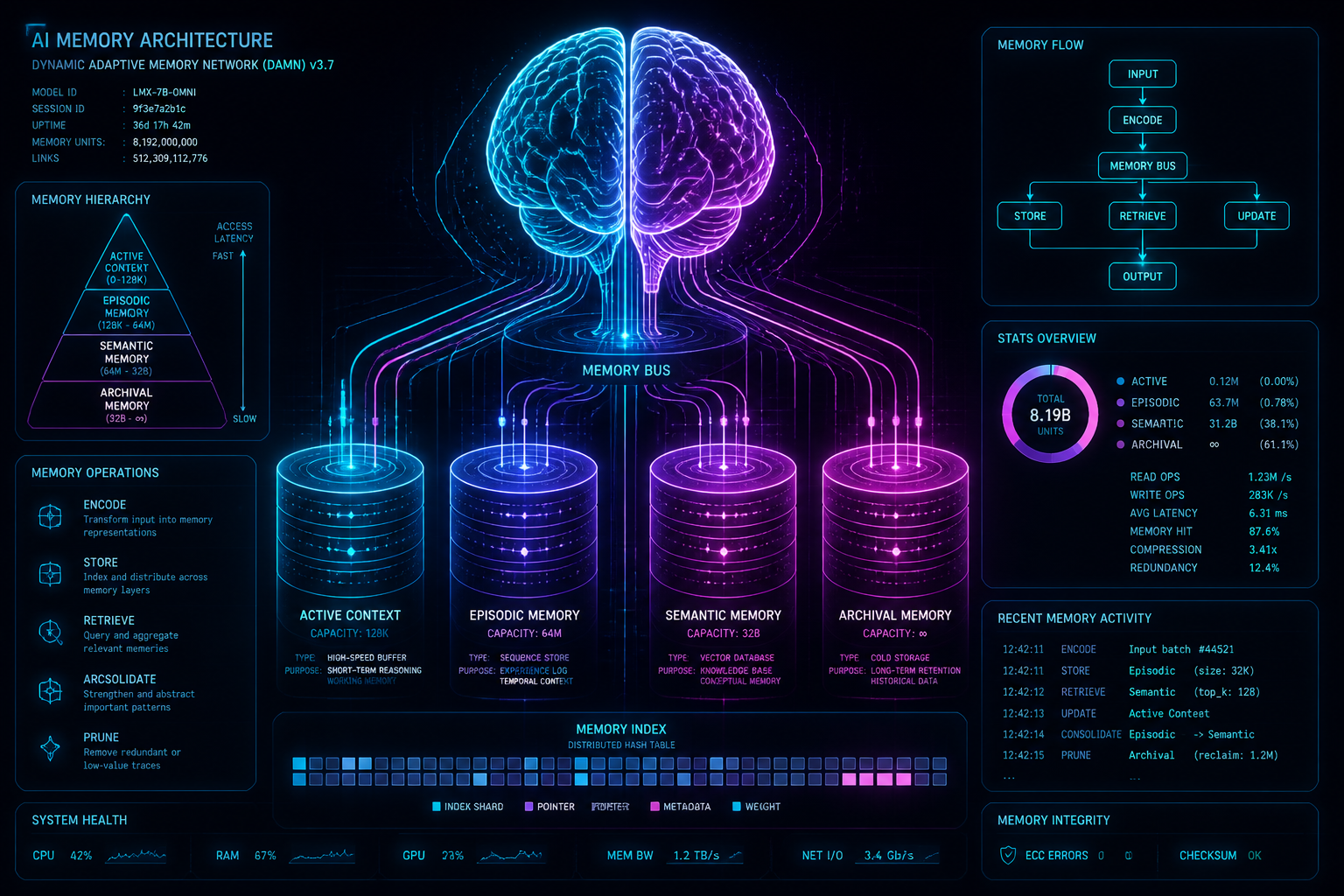
Without memory, an agent is amnesic. It would forget what it did 5 minutes ago. Autonomous systems use two primary forms of memory to maintain state across long-running tasks.

AI memory structure combining brain and database

Short-Term (Context Window)

The immediate conversational history and scratchpad. It is fast and highly accurate, but strictly limited by the LLM's maximum token count (e.g., 128k tokens). Once filled, older information falls out.

Tool Usage & Environment Interaction

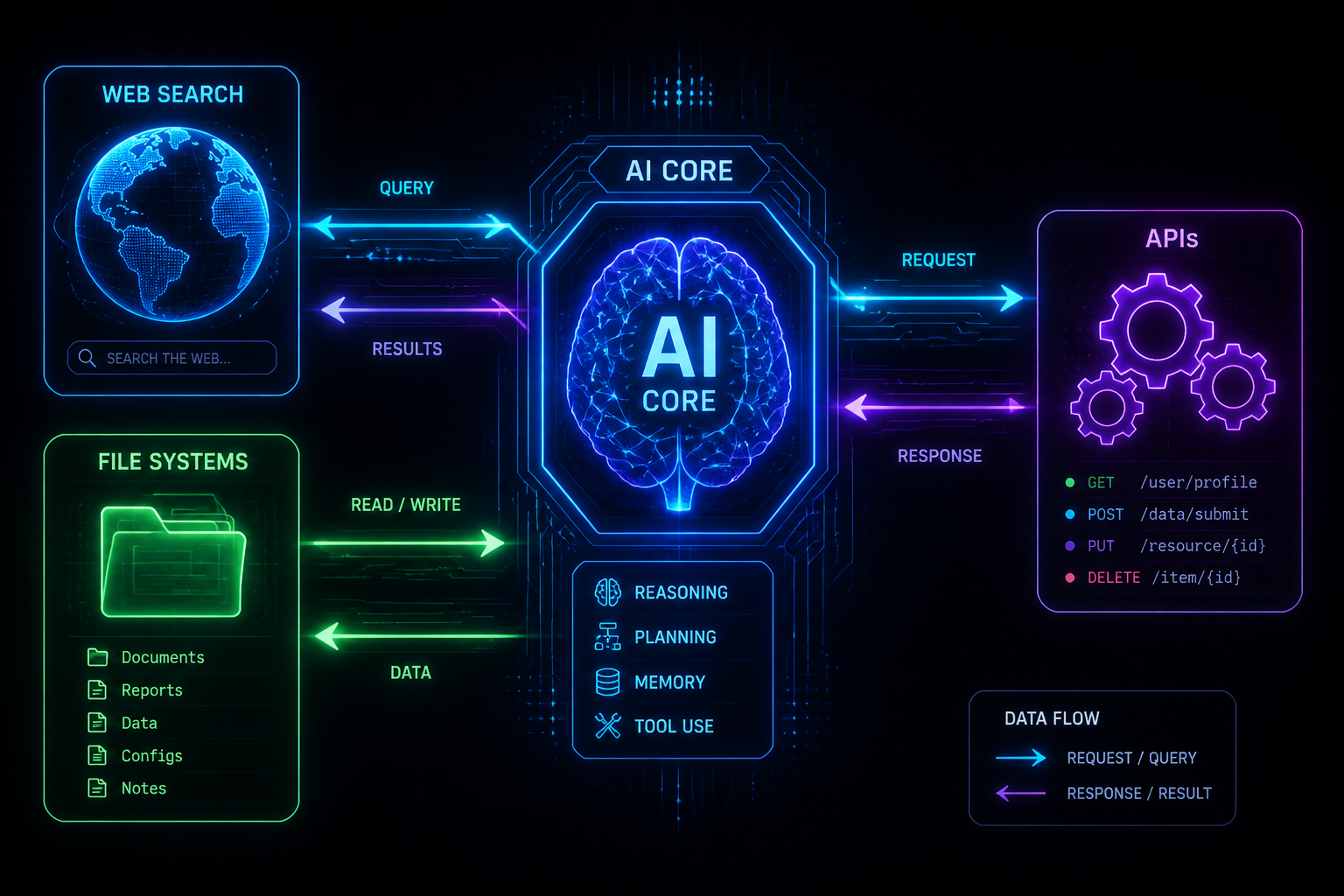
LLMs cannot natively browse the web, write files, or query APIs. To affect the outside world, autonomous agents are equipped with "Tools"—functions they can call to execute actions and retrieve real data.

Agent connecting to external tools

Interactive Terminal: Tool Execution

> Agent decided to call tool: search_web("Quantum Computing News")

Autonomous Decision-Making

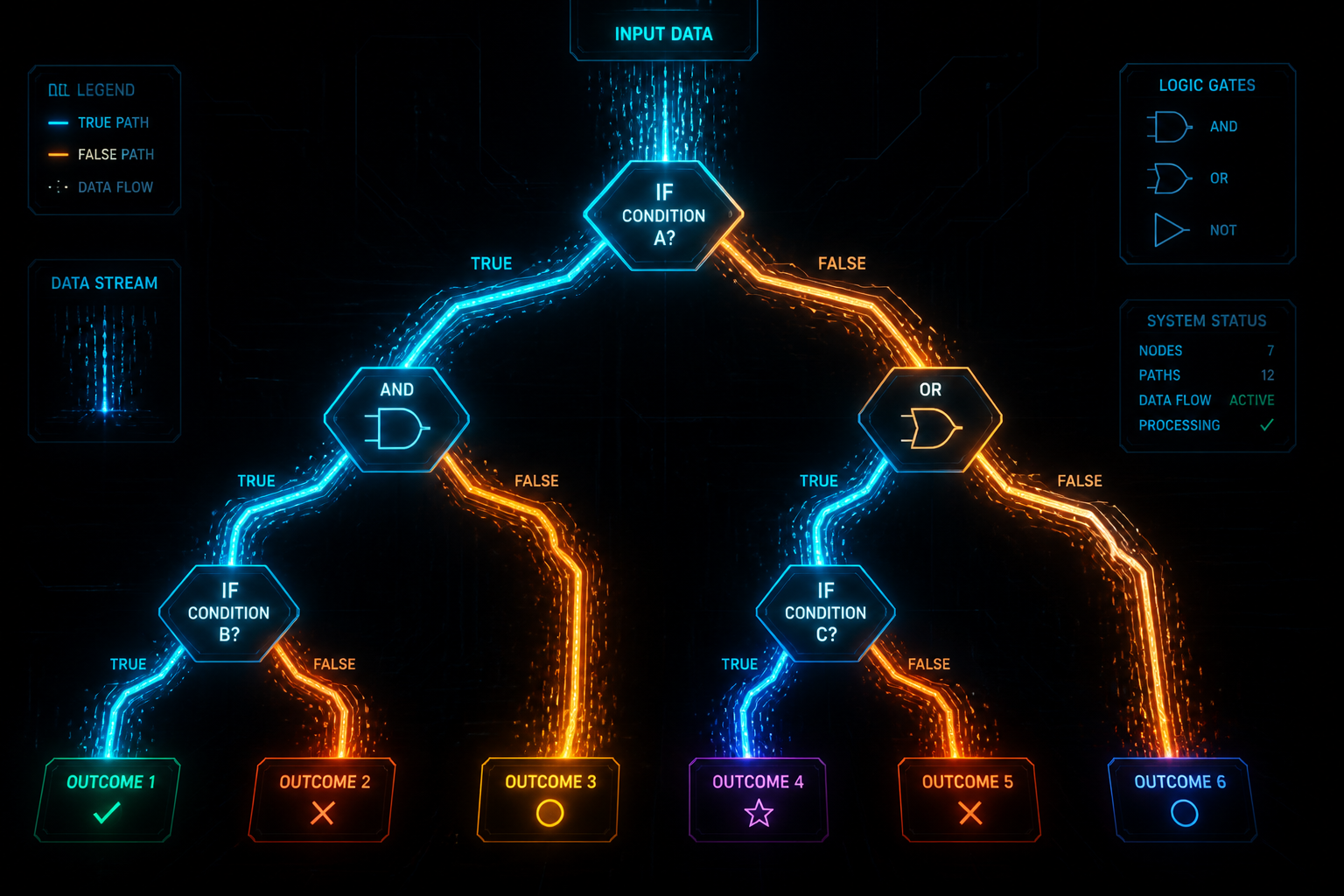
At every step, the agent must decide its next move based on the current context, the task tree, and the outputs of previous tools. It uses routing logic to dynamically choose paths.

Decision tree structure

State: User asked for current weather in Tokyo.

Choose the correct routing path for the agent:

Knowledge Check

Which component allows an autonomous agent to maintain context over long-running tasks and past sessions without exceeding token limits?

Feedback & Reflection Loops

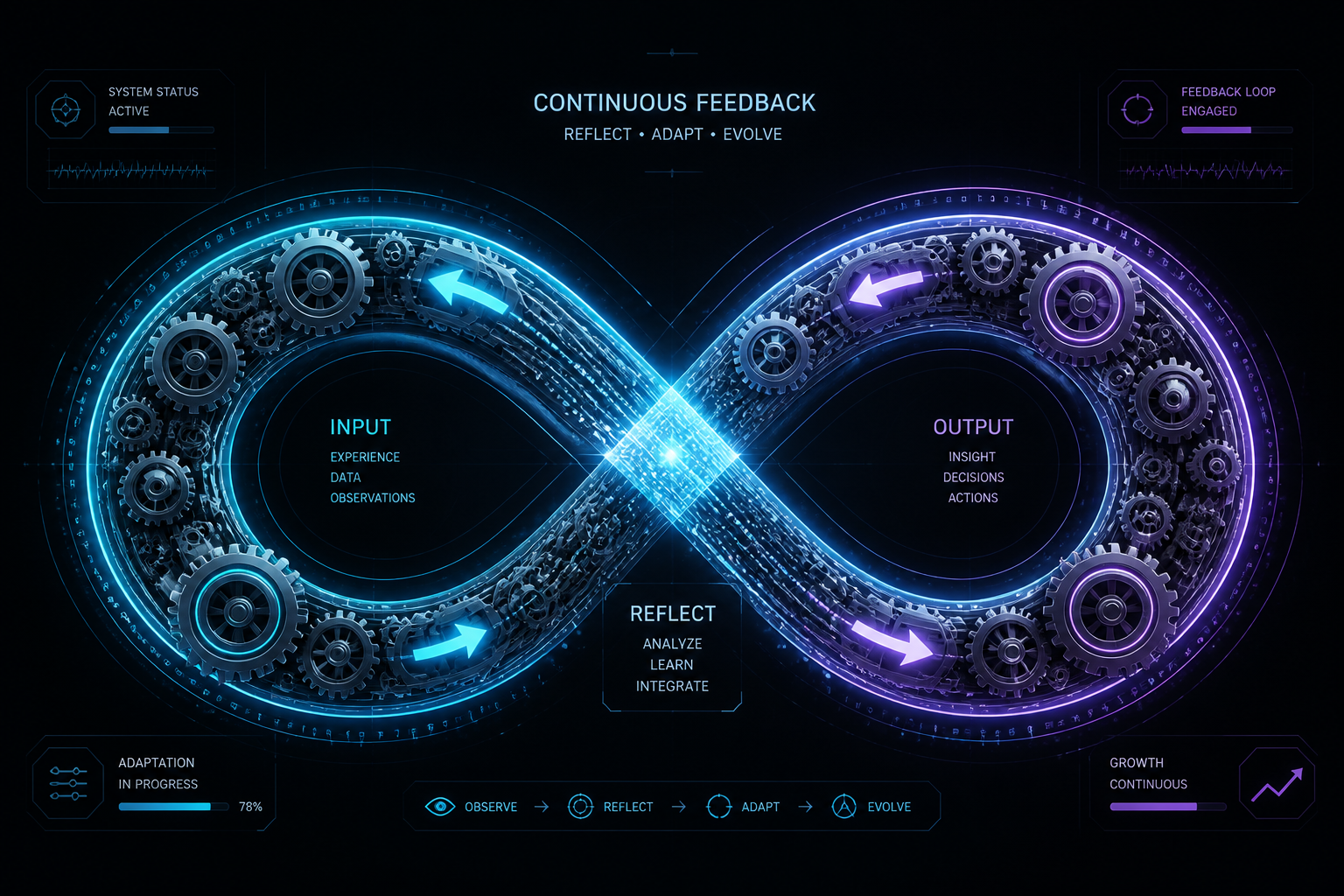
Agents make mistakes. Tools fail, APIs timeout, and code errors out. The hallmark of true autonomy is the ability to recognize a failure, reflect on the error, and try a new approach.

Infinity symbol representing continuous feedback loops
> Action: Agent wrote `script.py` to parse JSON.

Adaptive Re-Planning

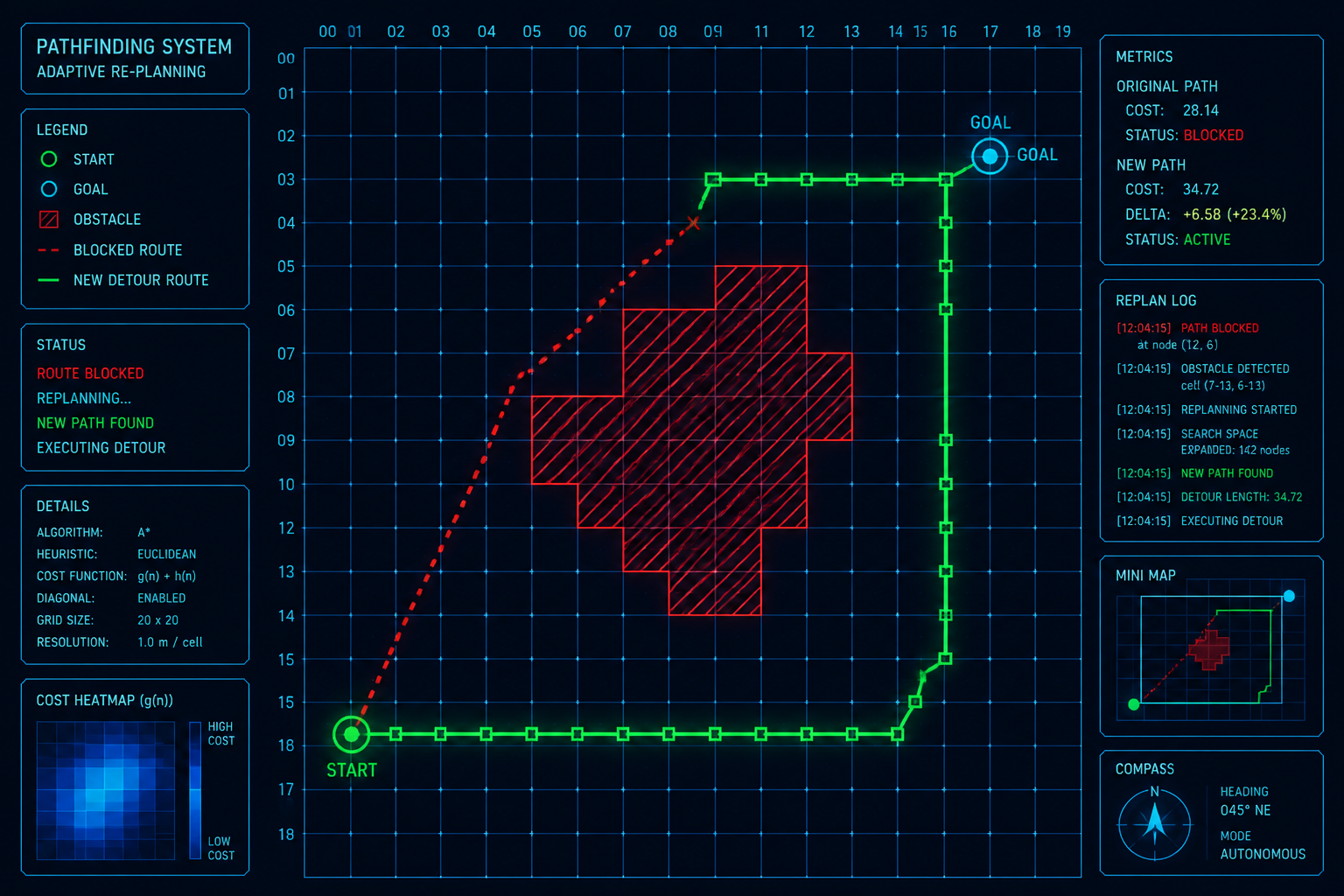
Sometimes, reflecting on an error reveals that the entire plan is flawed. Adaptive re-planning allows the agent to discard its current task tree and generate a new path to the goal based on new constraints.

Neon pathfinding grid showing adaptive replanning

Simulation: Navigating the Task Tree

START
NODE B (Click to block)
GOAL

Knowledge Check

How does "reflection" improve an autonomous agent's performance?

Human-in-the-Loop (HITL) Control

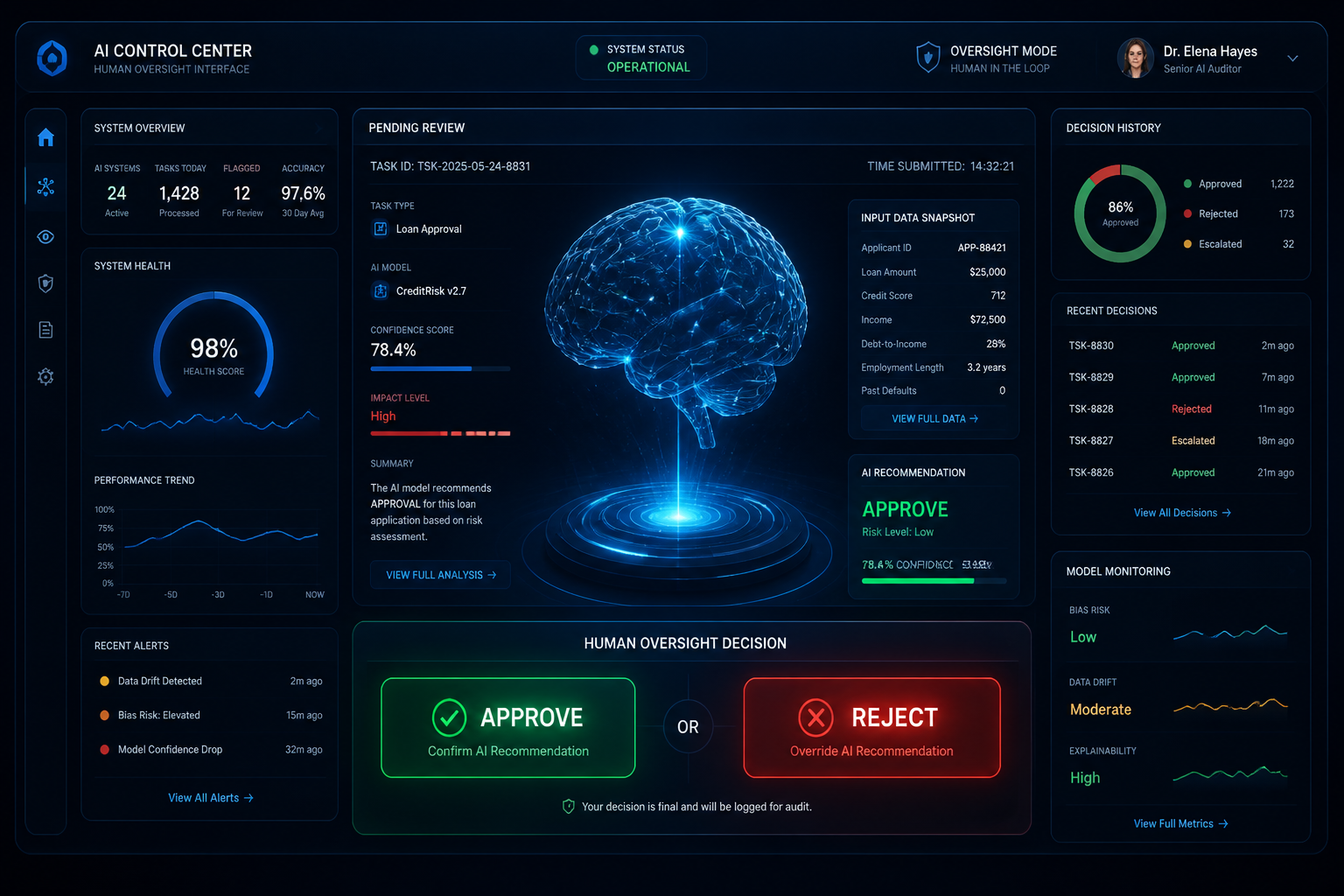
True autonomy is powerful but risky. For high-stakes actions like modifying production databases, sending emails, or executing financial transactions, systems implement HITL architecture. This pauses the agent and requests human approval before proceeding.

Dashboard showing AI control panel with Approve and Reject
Level 1 Level 2 Level 3

Failure Handling & Recovery

Robust autonomous systems don't just crash when they hit an error. They classify the failure and apply a specific recovery strategy.

Digital shield protecting core from errors

Interactive: Match the Strategy

Click to reveal strategy for: API Rate Limit Reached
Click to reveal strategy for: Tool Output Unparseable
Click to reveal strategy for: Agent Stuck in Infinite Loop

Real-World Autonomous Workflows

How is this technology applied today? Autonomous agents are moving out of the lab and into production workflows, functioning as specialized digital coworkers.

Futuristic command center showing parallel workflows
Deep Research Agent

Autonomously browses the web, reads 20+ academic papers, discards irrelevant sources, synthesizes data, and generates a fully cited literature review without human intervention.

Key Takeaways

  • 1.
    Autonomy vs Reactivity: Agents execute tasks continuously to reach a goal, rather than just generating text for a single prompt.
  • 2.
    Task Decomposition: Agents break complex, vague goals into executable trees of sub-tasks.
  • 3.
    Tools and Memory: Agents use APIs to interact with the environment and Vector Databases to recall long-term context.
  • 4.
    Reflection and Replanning: Robust systems evaluate their own errors, rewrite their approach, and dynamically adjust their paths to succeed.
  • 5.
    Human-in-the-loop: High-stakes actions require oversight to balance speed with safety and accuracy.

Final Assessment

Test your understanding of Autonomous AI Systems.

  • ✔️ 5 multiple-choice questions
  • ✔️ Requires 80% to pass and earn your certificate
  • ✔️ You must select an answer before proceeding to the next page
Question 1 of 5

What is the primary difference between a simple reactive chatbot and an autonomous AI agent?

Question 2 of 5

Why is task decomposition critical for an autonomous system?

Question 3 of 5

How does "reflection" improve an autonomous agent's performance?

Question 4 of 5

Which component allows an autonomous agent to maintain context over long-running tasks and past sessions?

Question 5 of 5

In high-stakes environments, why is a "Human-in-the-Loop" (HITL) architecture implemented?

Your score will appear here after you complete the assessment.

esson copyright">© 2026 Arbiteria Lesson | Powered by Zero2AI

Your score will appear here after you complete the assessment.